Türkçe
 Deutsch
 English
 Български


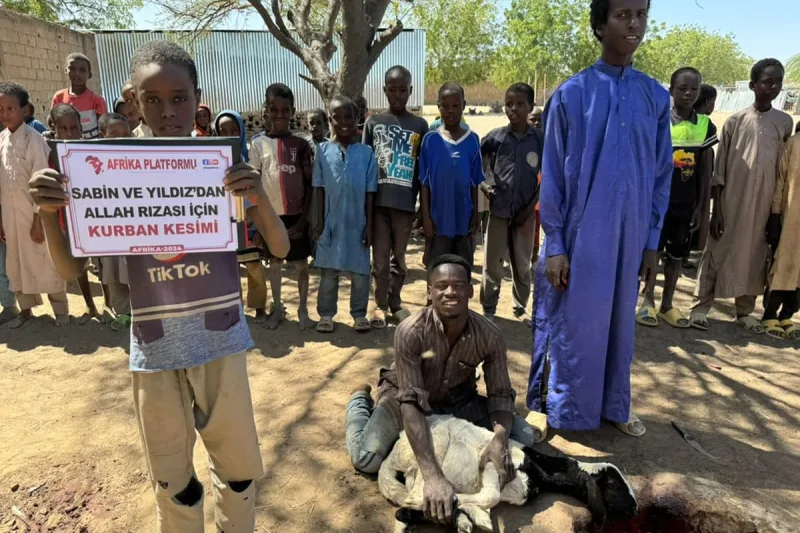
Sacrifice Slaughter Process in Africa
Sacrificial animals are generally bovine or small cattle such as sheep, goats, cattle and camels
Although the sacrificial process in Africa varies from region to region and even from country to country, it is generally carried out in accordance with the Islamic religious rules. Sacrifice is a religious worship usually performed during Eid al-Adha. Here is a general framework:
1. Preparation
- Animal Selection: Sacrificial animals are generally chosen among cattle or small animals such as sheep, goats, cattle or camels. The health condition, age and gender of the animals must comply with Islamic rules.
- Cleaning: Animals are cleaned before slaughter and prepared for slaughter by people with ablution in accordance with religious rules.
2. Cutting Process
- Prayer: Before slaughtering, a prayer (Bismillah, Allahu Akbar) is recited stating that the animal's life is sacrificed in the name of Allah.
- Cut: The animal's throat is cut by reciting the Bismillah. The sacrifice process is done quickly and in a way that causes the least pain to the animal. Generally, it is waited until the animal's blood is completely drained.
3. Sharing
- Meat Distribution: One-third of the sacrificed meat is reserved for the family, one-third is distributed to relatives and friends, and the remaining one-third is distributed to those in need. This is considered part of social solidarity.
- Bulk Cuts: In some African countries, sacrifices are made in central slaughterhouses and the meat is distributed in bulk. In some regions, sacrifices are organized by mosques or local communities.
4. Native Apps
- Cultural Differences: In various parts of Africa, sacrifice can be enriched by different cultural and local practices. For example, in some regions, special prayers, songs, or ceremonies may be held before or after the sacrifice.
There may be some changes in different regions of Africa according to local cultural and religious practices, but in general these processes are carried out within the framework of the sacrificial rules of Islam.